Startup Fundraising
This post outlines a structured guide for Dutch founders on selecting and sequencing funding. It stresses that the method of raising capital is as important as the source, and that clarity on what is being funded should precede discussions of terms or valuation.
 Seif Kabil
Nine years ago, I sat across from a founder who had just closed what was then an eye-watering raise. When I asked him what he had learnt from his fundraising journey, he said something that stuck with me: ‘I wish I'd known that choosing how to raise money was just as important as choosing who to raise from.’
That may seem rather obvious nowadays, but it left an impression on me as a fresh VC investment analyst. And it's a lesson we have seen play out repeatedly across hundreds of investments in European tech. Dutch startups raised €2.5 billion in 2024, making it the third-best funding year ever and representing a 19% increase from 2023. Yet many founders still struggle to understand the full spectrum of funding options available to them, and the full implications of those choices.
For founders, understanding which type of funding fits your stage, strategy, and goals has never been more important. In the Netherlands, a growing mix of government grants, venture capital, corporate investors, and alternative financing now makes it possible to match capital to needs. The purpose of this post is to serve as a primer and rough guide to the main funding options available, helping founders understand the trade-offs, benefits, and practical steps for each.
Before thinking about term sheets, valuations, or investor pitches, it’s worth asking a more fundamental question: what exactly are you funding? Are you building a prototype, testing your business model, refining a go-to-market strategy, hiring key team members, or preparing to scale operations? Each of these priorities has different capital requirements and points you toward different types of investors and funding instruments. Once you have clarity on what you need to achieve, the who and how of fundraising become far easier to navigate.
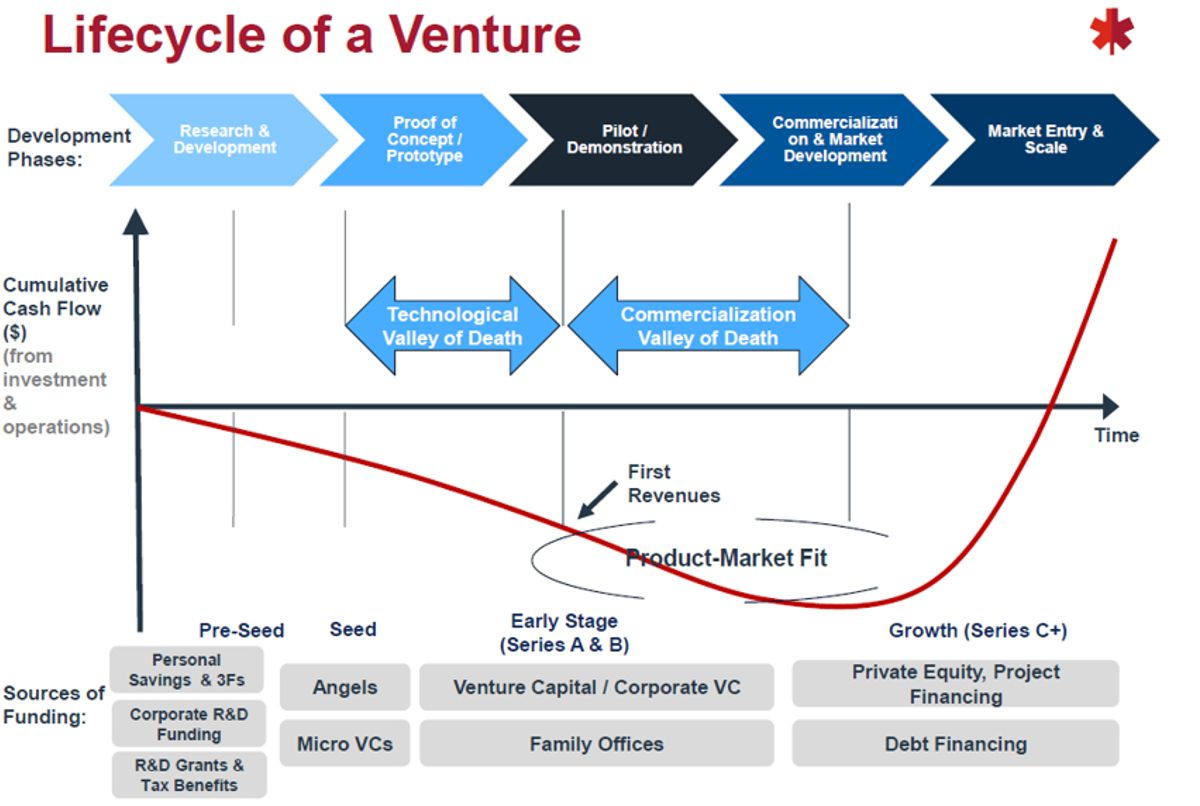
The Netherlands now ranks as Europe's fourth best-funded startup ecosystem. But what the headlines miss is the diversity of that capital. From government grants that require no dilution to corporate VCs that can open doors and new markets across Europe and beyond, the Dutch funding landscape offers several stage and strategy-specific tools.
Herein I infuse with some of my own musings of the merits and potential drawbacks associated with them. For each source, I aim to clarify what mode of funding they provide. Some offer equity financing, where you sell ownership in your company. Others provide debt that must be repaid. Still others offer grants that require no repayment or dilution.
The funding sources may vary, but they operate in the same mode. The real distinctions you need to understand are more nuanced: dilutive versus non-dilutive, institutional versus individual investors, strategic versus purely financial backers.
Employee Stock Option Plans (ESOPs)
An ESOP is not a direct infusion of external capital, but it acts as a quasi-funding instrument by allowing you to reward and retain key employees with equity rather than cash. Startups allocate a portion of their equity (commonly 5–20% for early-stage ventures) to an ESOP pool, granting options that vest over time. When employees exercise these options, they convert into shares, providing them a stake in the company’s growth. A well-calibrated ESOP can drive performance and loyalty without undermining governance or strategic control.
Why it matters for funding: ESOPs reduce the need for external capital in two ways. First, you can hire talent critical to your growth without committing scarce cash to salaries or bonuses. Second, because your team has ‘skin in the game’, incentives align tightly with long-term company performance, which can accelerate product development, customer acquisition, and operational execution - all milestones that make you more attractive to investors later.
When to use it: Introduce an ESOP early, ideally during or just after your seed round, to ensure you can recruit and retain top talent without diluting founders excessively or raising unnecessary external capital. Many investors mandate an ESOP as a pre-condition for investment. ESOPs are especially valuable for startups in highly competitive talent markets or with long development cycles, such as deep tech, biotech, or SaaS ventures scaling internationally.
The tradeoff: ESOPs create future dilution. When employees exercise options, founders’ ownership is diluted, which affects subsequent financing rounds and valuations. However, this ‘internal dilution’ is generally cheaper than raising equivalent capital from external investors, who demand higher control, governance rights, and board influence.
Microsoft
Microsoft used employee stock options strategically to attract and retain top talent in its early years, aligning employees’ incentives with the company’s long-term growth. Unlike some startups that over-allocated ESOPs, Microsoft carefully managed option pools, preserving founder and early investor ownership while still rewarding key contributors.
Snap
Snap granted substantial equity to early employees to attract top talent, but by the time of later funding rounds and the IPO, these allocations had significantly diluted founders and early investors. Large ESOP pools also added governance and cap table complexity, as expectations around paper wealth and liquidity needed careful management.
Bootstrapping
Bootstrapping means building your company using your own savings, revenue, or limited personal borrowing—without taking outside equity. It allows you to retain full ownership, control, and strategic flexibility, giving you the freedom to test ideas, iterate quickly, and grow on your own terms.
When to use it: Bootstrapping is ideal in situations where you can reach profitability relatively quickly or have strong unit economics. Lifestyle or ‘slow burn’ companies, such as those not requiring massive upfront capital, benefit most. Even for startups targeting larger markets, bootstrapping the earliest stages (like product validation or initial customer acquisition) can save founders from unnecessary dilution and give them a stronger position in later funding rounds.
Strategic insights:
- Discipline is the ultimate advantage: When you bootstrap, every euro counts. You are forced to focus on metrics that matter, prioritise product-market fit, and avoid distractions that don’t drive value.
- Timing matters: Bootstrapping early allows you to build a track record of traction before approaching investors. Later, even a modest revenue run-rate can dramatically improve your negotiation leverage and valuation.
- Founder alignment: Retaining ownership and control early prevents the pressure of outside investors dictating strategy, giving you time to refine your business model and team.
Trade-offs: Bootstrapping preserves control but usually means slower growth. Some ideas, particularly deep tech, hardware, or capital-intensive platforms, simply cannot scale fast enough without external funding. Misjudging when to raise capital can lead to underinvestment, missed market opportunities, or losing the race to competitors. The key question is: are you building a sustainable lifestyle business, or do you need external capital to capture a large market?
Dell
Dell was founded in Michael Dell’s university dorm room with $1000 in savings, building and selling PCs directly. Dell scaled without external capital.
Friendster
Friendster initially relied on bootstrapped funding to grow its social networking platform. Limited early capital prevented the company from scaling its infrastructure fast enough, which contributed to slow performance, user frustration, and ultimately losing market share to Facebook.
Friends & Family + Angel Investors
Equity financing (selling shares in your startup) - both friends and family and angel investors provide early-stage capital in exchange for equity. The difference is that angels are typically more sophisticated investors with clear return expectations and relevant expertise (for example former entrepreneurs, operators, or sector-specific experts). Working with an angel or angel syndicate (a group of angels that co-invest) often marks the start of the discussions around valuation. How much is your startup worth?
Very early-stage pre-revenue startups often use legal instruments such as Simple Agreements for Future Equity (SAFEs), convertible notes, or simple equity agreements that typically defer valuation discussions until a priced round, such as your Series A. You don’t always need a formal valuation for angel investment, especially if you use convertible instruments. But you do need a clear understanding of what your company is worth (even if just a rough estimate) to agree on equity and protect both you and the investor.
When to use it: After validating your idea but before you're ready for institutional VC. Typical investment bands range between €25,000 - €250,000 for pre-product capital from family and friends, €50,000 - €500,000 for seed-stage angels with early traction, and between €500,000 - €2 million via angel syndicates.
Critical mistakes to avoid: Your angel should create value for you, your co-founders and your business beyond their capital. That means acting as a confidante, trusted source of advice and door-opener, especially as your startup grows and you find yourself exposed to a flurry of mentors, advisors and ecosystem parties ready and waiting to provide you with support.
Just as a good angel will always do their due diligence on you (their failure to do so should worry you), you should feel free to ask similar questions. What is their track record? Are other companies in their portfolio gaining value from their contribution? Are they providing advice, or are they trying to consult you in a specific direction?
Amazon
Amazon’s Jeff Bezos received around $250K from his parents and close friends to help launch the company. These personal contributions allowed Bezos to cover initial inventory and operational costs, giving Amazon the runway to grow from a small online bookstore into a global e-commerce platform.
Jawbone
Jawbone raised early funding from a large group of angel investors, which provided capital to develop Bluetooth headsets and fitness trackers. The fragmented cap table and pressure to grow quickly created governance and operational challenges, ultimately contributing to the company’s collapse in 2017.
Government Grants & Subsidies
Non-dilutive grants, subsidies and tax incentives (no equity, no repayment) encompass an array of funding programmes at the European level, Dutch central government funding, regional funding via the Dutch Regional Development Agencies (ROMs) such as InnovationQuarter, InWest and OostNL.
Grants and subsidies at both the Dutch and European level can be a great way to finance your venture or onboard additional resources.
Depending on your industry and technology base (e.g. patents, R&D intensity), tax deductions such as the WBSO (Research and Development Tax Credit) and Innovation Box may be valuable options in limiting your tax burden during the growth phase.
The WBSO allows companies to deduct 32% on the first €350,000 of R&D costs, and 16% on amounts above that in 2024. Self-employed startups can receive an additional allowance of €23,332. Programs like Innovation Credit can provide loans up to €3 million.
It’s important to note that although many subsidy schemes are valuable and have helped co-fund some of Europe’s great startups, finding relevant calls for proposals and applying can be time-consuming. Develop your templates and materials early-on to help you apply faster and more systematically, freeing up more time to focus on other fundraising sources as well.
Tesla
Tesla's company founders, Martin Eberhard and Marc Tarpenning (not Elon Musk) benefitted from federal and state grants and tax incentives to support electric vehicle development and clean energy projects. These included programs like the Advanced Technology Vehicles Manufacturing (ATVM) incentives and state-level EV subsidies, which helped reduce production costs and encourage early adoption of their vehicles.
Northvolt
Northvolt secured hundreds of millions in government grants and loans to build its EV battery gigafactory, but these came with requirements on production, sourcing, and green compliance. While the funding de-risked investment, it limited the founders’ strategic flexibility, added pressure to scale quickly, and contributed to financial strain when conditions deteriorated.
Venture Capital
VC is the funding type most associated with high-growth startups. VC firms provide equity financing on an institutional basis in exchange for shares and, typically, a board seat. Unlike angels or friends and family, VCs are professional investors whose goal is to generate significant returns through successful exits, either via an acquisition or an IPO. In addition to capital, VCs often provide strategic guidance, operational expertise, and access to networks that can accelerate growth.
Venture capital allows founders to scale aggressively, hire top talent, enter new markets, and accelerate product development far faster than bootstrapped or angel-funded growth. For startups with proven product-market fit, VC investment can be transformative, enabling rapid expansion that would be difficult to achieve with other forms of financing.
When to use it: VC typically enters the picture once a startup has validated its product or service, demonstrated early traction, and developed a repeatable business model. Seed and early-stage rounds generally range from €1–€3 million, focusing on product refinement and market validation. Series A rounds (€5–€15 million) are used to scale go-to-market efforts, expand teams, and optimise operations. Later-stage Series B rounds (€20 million and above) are designed for international expansion, new product launches, or large-scale strategic initiatives.
Strategic insights:
- Due diligence is mutual: Just as VCs perform detailed diligence on your business, you should investigate their track record, portfolio performance, and involvement in past companies.
- Investor alignment matters: Choose VCs who understand your market, can provide operational and strategic support, and will respect your vision for growth. Misaligned investors can lead to conflicts, mismanagement, or pressure for unsustainable growth.
- Board dynamics: Venture capital investment often comes with a board seat, giving investors influence over strategic decisions. Ensure you are comfortable with this governance structure before raising funds.
- Valuation vs. partnership: A high valuation may seem attractive, but the right investor fit is often more important than the headline number. Never optimise purely for valuation.
Airbnb
Airbnb raised early venture capital from investors including Sequoia Capital, Andreessen Horowitz, and Y Combinator. This funding allowed the company to expand globally, refine its platform, and scale operations rapidly, transforming it from a small room-sharing website into a leading international travel marketplace.
WeWork
WeWork raised massive VC funding to scale rapidly. The pressure to achieve hypergrowth led to unsustainable spending, governance issues, and a failed IPO that decimated its valuation.
Corporate Venture Capital & Strategic Investors
Equity financing tied to broader strategic objectives or network/ecosystem access. Investment arms of large corporations invest in startups aligned with their business. Similarly to traditional VCs, they take equity stakes—but their motivations extend beyond pure financial returns.
When to use it: When strategic value beyond capital matters: access to distribution, enterprise customers, or technical expertise. In certain regulated or government-heavy sectors such as finance, defence and deeptech corporate partnerships and pilots may be critical to validate your product or service, or build trust and brand equity in the sector.
The critical question: Before accepting corporate money, sit down and explicitly set criteria for success together. What does a win look like for them strategically? Does it align with your goals? If there's ambiguity, address it upfront: once they are on your cap table, realigning expectations becomes exponentially harder.
Read strategic rights provisions carefully. Some corporates negotiate rights that effectively give them veto power over your business. Be extremely cautious about exclusivity provisions or rights of first refusal.
An alternative to CVC is corporate-backed programmes such as the ABN AMRO+Techstars Future of Finance accelerator, Rockstart, and Startupbootcamp, to name just a few. These programmes provide well-managed acceleration with professional mentorship plus access to corporate networks and pilot opportunities—but at arm's length from the corporate. Startups are part of a much larger portfolio. Accelerator programmes typically provide between €20,000 and €150,000 in funding plus intensive growth support and access to additional capital.
Spotify
Spotify received early strategic investment from major music industry players, including Sony Music and Universal Music Group. These partnerships provided crucial support for licensing agreements and market access, helping Spotify scale its streaming platform across Europe while navigating complex music rights.
Argo AI
Argo AI raised over $2 billion from Ford and Volkswagen to build self-driving technology. When both automakers shifted strategic priorities (Ford pulled back from L4 autonomy), Argo shut down, showing how dependence on corporate backers can leave founders vulnerable when their partners’ long-term strategy changes.
Equity Crowdfunding
Crowdfunding allows you to raise capital from a large group of individuals, typically between €250,000 and €2 million. Equity-based crowdfunding can work well for consumer-facing companies with strong communities, and those where market validation from ‘the general public’ is beneficial and credible, but founders often underestimate its structural drawbacks; most importantly:
- Fragmented cap tables: Most reputable platforms do use pooling and nominee accounts, so that there is one shareholder. The risk otherwise is that you may end up with several micro-shareholders.
- Voting and governance complications: Crowdfunding investors often receive ordinary shares or depository receipts via a STAK (an entity that manages the pool of retail investors’ depository receipts), but the rights are rarely aligned with standard VC governance.
- Burdensome information rights obligations: Retail investors expect frequent updates and transparency that go beyond normal institutional reporting. Platforms may impose periodic reporting obligations, but in practice founders find themselves managing many expectations that may not always be aligned with growth and performance.
- Limited flexibility or costly restructuring requirements in future rounds: Crowdfunding rounds rely on platform templates with little room for negotiation. These may include impractical preemptive rights, notice periods, or procedural steps that VCs will not accept. Many startups find they have to restructure their crowdfunding instruments before raising a priced round (via more traditional VC instruments).
Equity crowdfunding can be a powerful tool for some startups, particularly those with a strong community or consumer-facing product, but it’s not right for every business. Founders need to carefully consider their growth trajectory, business model (B2B vs. B2C), scalability, and time to revenue before deciding if this funding route aligns with their long-term strategy. Choosing the right platform, and understanding the (sometimes minute or technical) differences between how different platforms structure their instruments may not be the most exciting part of fundraising, but is absolutely essential.
Monzo
The challenger bank Monzo raised early capital through multiple equity crowdfunding rounds on Crowdcube, attracting tens of thousands of retail investors. This funding not only provided essential resources to grow the bank but also created a loyal community of customers who supported and promoted the brand as it scaled.
Elio Motors
Elio Motors raised funds via equity crowdfunding for its three-wheeled vehicle. The company failed to deliver the product, leaving many small investors unable to liquidate their holdings and highlighting the risks of unproven projects funded by a large crowd.
A Word on the Dutch Notarial Process
All the funding modes and instruments we have discussed will require the involvement of a civil-law notary (notaris). This applies whether you're raising €50,000 or €50 million - including at every new raise. It is mandatory, inflexible, and can often feel archaic in a world where you can incorporate a Delaware C-Corp or UK Ltd online in 15 minutes.
The practical pain: Budget around €2,000 to €10,000 in notarial fees per round and potentially several hours of listening to dry documents being read aloud. None of this is trivial for an early-stage startup. Factor in 1-2 weeks for the process once terms are agreed - and I've seen it take longer when notaries are backlogged.
For Dutch-based founders at the term sheet stage with US and UK VCs especially: it is best to ensure your prospective investors are aware of the process and timelines to avoid any last-minute logistical challenges.
For more information on how Kwantor helps founders build for scale faster, cheaper and more efficiently, check out our Products page.
Parting Notes: Sequencing Your Funding
- Start with the least dilutive options. Begin with government grants, subsidies and tax incentives - quasi NSA money that reduces burn rate. Most such programmes also provide countercyclical capital when private markets contract, or seed funding dries up. Bootstrap as far as possible with customer revenue. Only when you've exhausted these options and have clear use for growth capital should you consider equity.
- Match funding to needs. Do not raise a €5 million Series A when €750,000 would get you to the next meaningful milestone. It's better to raise smaller amounts at lower valuations and earn your way up.
- Timing beats everything. The best time to raise is when you don't desperately need to. Start building investor relationships 6-12 months before you need capital. When VCs see you hitting milestones over time, they develop conviction; especially when they see you focusing on the metrics that matter for the next growth phase. When they see you scrambling because you're about to run out of cash, they smell panic.
- The right investor matters more than the right terms. The best term sheet isn't the one with the highest valuation - it's the one from the investor who genuinely understands your market, can open doors you can't open yourself, and will support you through inevitable difficult periods. One mediocre investor on your board can create years of problems.
Founders will have to not just raise capital, but sequence and shape it, and push back when it doesn’t serve the company. They start with what’s least dilutive, stretch what they have, and treat every euro and every conversation as a test of focus and discipline. Saying no is as much a part of growth as saying yes, and often, the right no matters more than any yes. Saying no may sound like a luxury many founders cannot always afford, but the sources of capital are diffuse, and a rushed yes may turn out to be a false economy.